How to Scrape LinkedIn Sales Navigator Leads With Verified Emails
(updated)
15-Second Summary
- Sales Navigator is the best B2B lead database on the planet, and the worst one to get data out of. Every filter you want, zero export button
- LinkedIn's official API can't help you. Sales Navigator data sits behind SNAP, a gated partner program that explicitly forbids lead list exports, and it's closed to new partners
- Building your own scraper means cookies, anti-bot detection, and a banned Sales Navigator seat. Fun project, expensive lesson
- Sales Navigator caps every search at 2,500 results and every account at 5,000 leads a day. Most scrapers just pretend those limits don't exist and hand you a truncated list
- lobstr.io returns 87 fields per lead at 100 leads per minute, splits searches past the 2,500 cap, enriches verified emails and mobile numbers, and runs unlimited synced accounts so the daily cap stops being your ceiling
- This guide shows how to scrape Sales Navigator leads step by step, including account sync, search URLs, split search, enrichment, and automated delivery
So here you are... trying to pull a clean lead list out of Sales Navigator after paying LinkedIn for the privilege of seeing that data in the first place.
You've built the perfect search. 40,000 matches. Every filter dialed in.
Then you go looking for the export button and discover there isn't one.
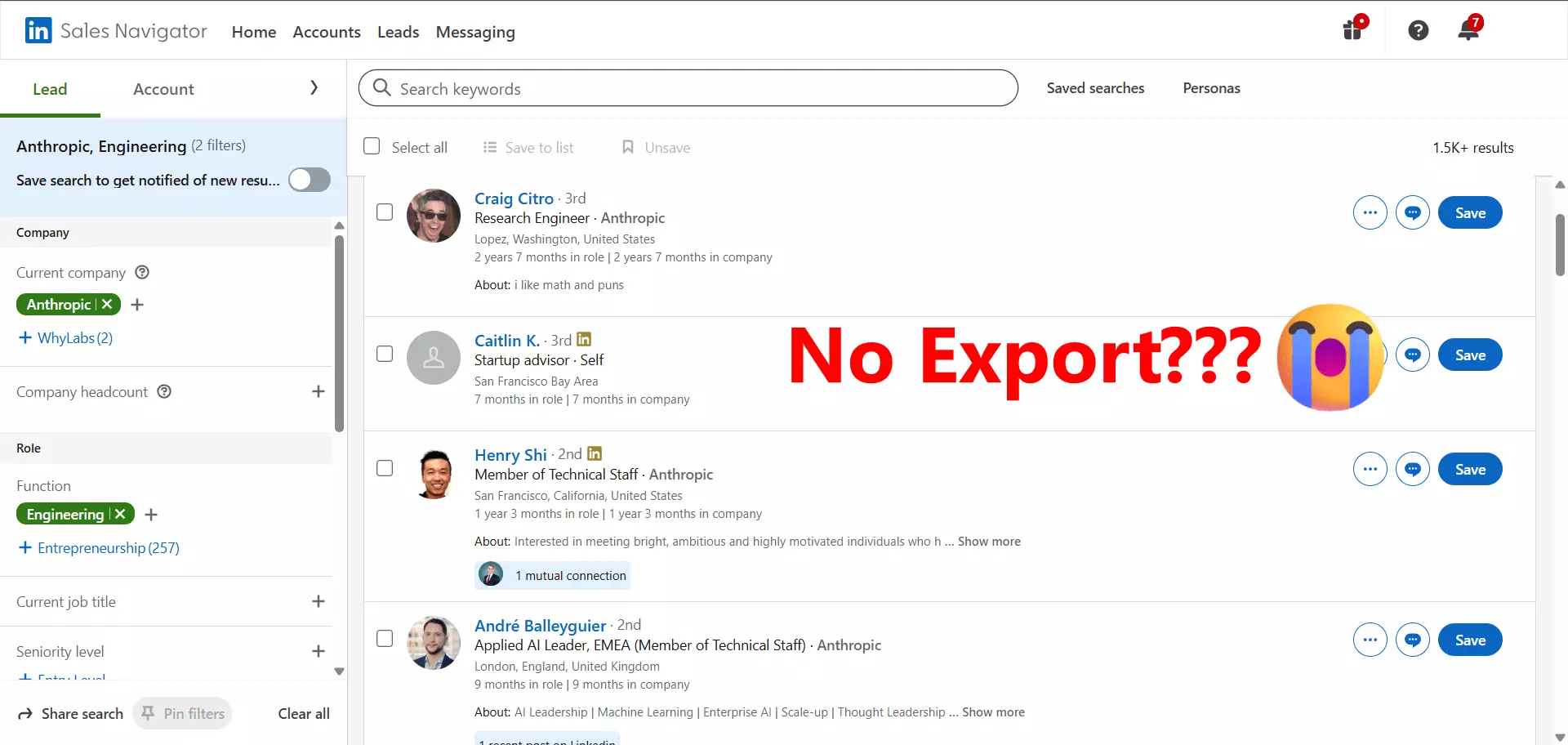
Some people will tell you it's impossible. It isn't.
Don't worry, I got you. 😉
Here's a no-nerd tutorial on how to scrape LinkedIn Sales Navigator leads, with verified emails and mobile numbers, without writing a single line of code.
But LinkedIn has an official API for this, right?
Does LinkedIn offer an official API for Sales Navigator leads?
I'll give it to you straight: yes, there's an API. No, it will never give you a lead list.
It's called SNAP, the Sales Navigator Application Platform. A gated partner program, open to approved vendors only, mostly CRMs and sales platforms.

It covers three services. Display Services to embed Sales Navigator UI modules, Analytics Services for bulk activity exports, and Sync Services for CRM contact matching.
Notice what's missing.
Can SNAP export leads?
No. No lead list exports, no bulk profile downloads, no enrichment workflows.
The one thing you actually want is the one thing it's built never to produce.
How much does SNAP cost?
LinkedIn doesn't publish a price. It sits on the Advanced Plus plan, which isn't publicly priced either, so you talk to a rep and find out what your number is.
Can I access SNAP now?
No. There's a standing note at the top of LinkedIn's own SNAP documentation.
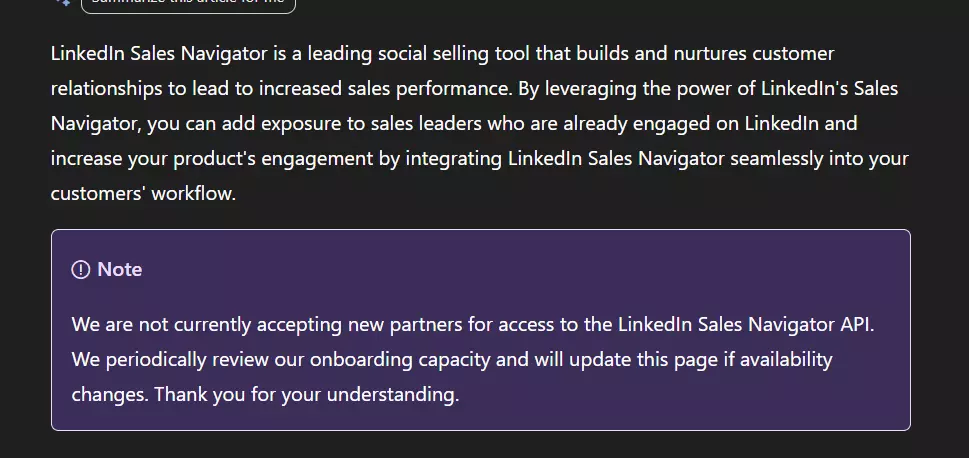
"not currently accepting new partners for access to the LinkedIn Sales Navigator API"
No application form, no waitlist, no published timeline. Existing partners keep their access, everyone else waits.
And that's exactly why you need a scraper.
But is it even legal to scrape LinkedIn Sales Navigator data?
Is it legal to scrape LinkedIn Sales Navigator?
Disclaimer
This section is for general informational purposes only. It's based on publicly available sources and practical interpretation, not legal advice.
Laws vary by country and change over time. If compliance, contracts, or platform risk matter to you, talk to a qualified legal professional.
Let me break this down into two parts:
- Does LinkedIn allow scraping?
- Is it actually legal?
Does LinkedIn allow scraping?
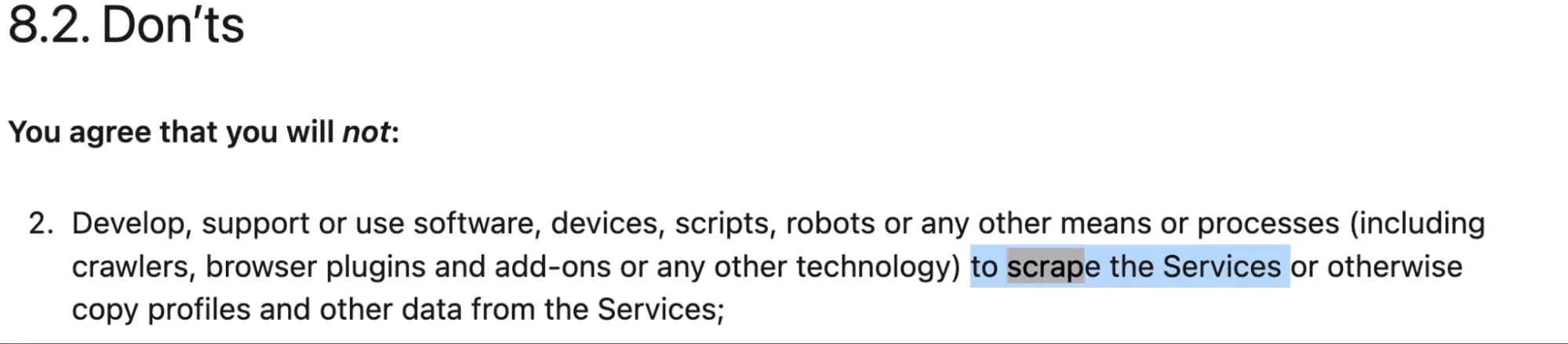
But does a Terms of Service clause make it illegal?
Is it legal to scrape Sales Navigator data?
Absolutely yes! It's generally legal.
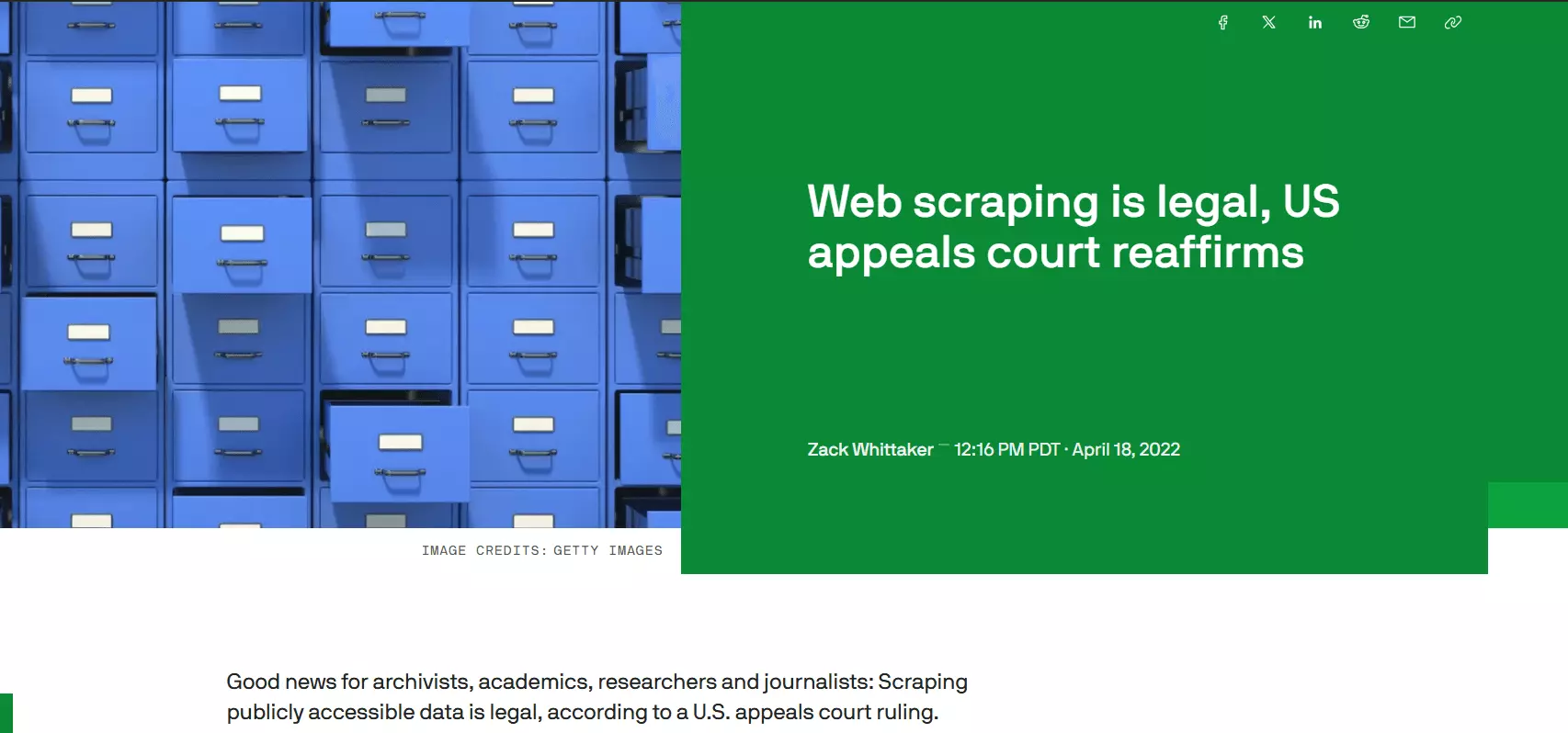
Breaking a Terms of Service is a civil contract matter between you and LinkedIn, not a crime.
And on Sales Navigator specifically, you're using your own paid seat to see data your account is already licensed to see. You're automating your own access, not breaking into anyone's.
I've covered the court cases, the GDPR angle, and the regulations in detail in our legal series.
But legal doesn't mean reckless. Leads are personal data, which makes this stricter than scraping business listings. You still need to:
- Respect rate limits and stay inside LinkedIn's account caps
- Comply with GDPR and CCPA, since every row you collect is a real person
- Avoid republishing LinkedIn profiles as your own database
- Use the data responsibly with no harassment, spam blasts, or shady stuff
But how do I actually scrape Sales Navigator at scale?
2 ways to scrape Sales Navigator leads
Practically, you've got two options:
- Build your own scraper
- Use a ready-made scraper
Build your own scraper
This one's for the nerds. People who enjoy mass destruction.
Sales Navigator sits entirely behind a login, so step one is shipping your own session cookie into a headless browser and keeping it alive.
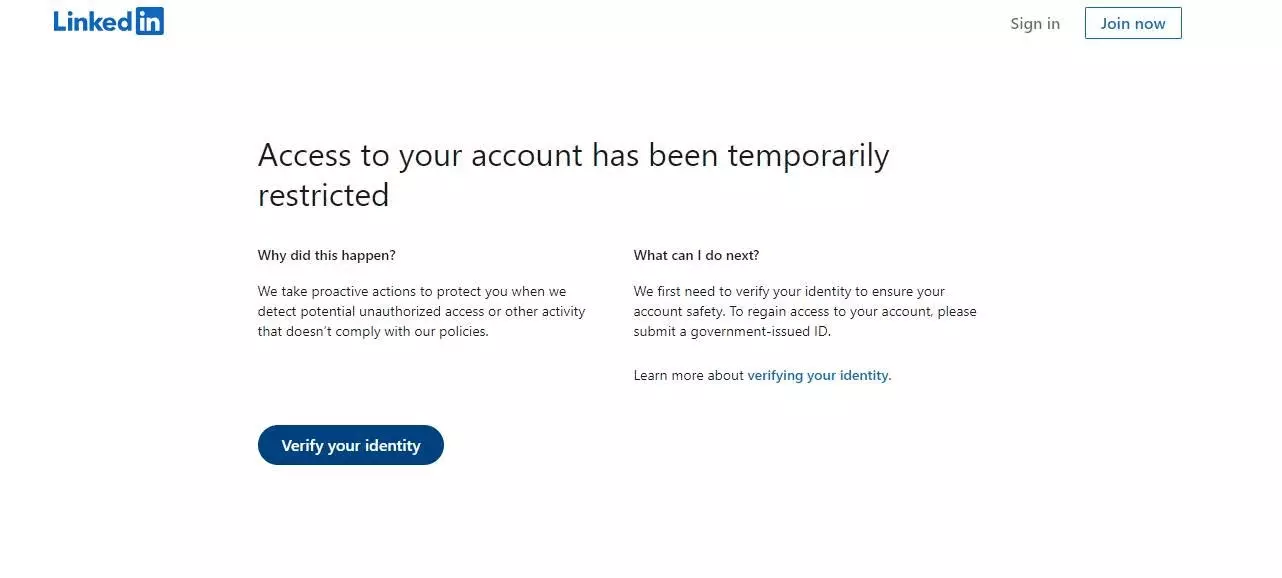
Then you meet the limits. Sales Navigator shows a maximum of 2,500 results per search, and caps your account at 5,000 leads per day.
Hit those wrong and you don't get an error. You get this.
Get ready to deal with:
- Session management that keeps a real logged-in cookie alive across long runs
- Account safety pacing, because scraping too hard on one seat gets it restricted or banned
- The 2,500-result ceiling, which means slicing every big search into facet sub-searches by hand
- The daily cap, which means juggling multiple accounts and rotating between them
- Constant maintenance every time LinkedIn reshuffles its internal payloads
And after all that you have names and job titles. No email, no phone number. That's a second tool, plus a verification service.
The worst part is the failure mode. A broken Google Maps scraper wastes an afternoon, a broken Sales Navigator scraper costs you a seat you pay for monthly.
Use a ready-made scraper
This is what smart people do.
Even here you've got APIs and no-code options. APIs are for nerds. This article is entirely no-code, so I'll skip the nerd stuff.
I bought the paid plan of every serious Sales Navigator scraper and ran the same searches through all of them, scored on data, cost, speed, usability, and scalability.
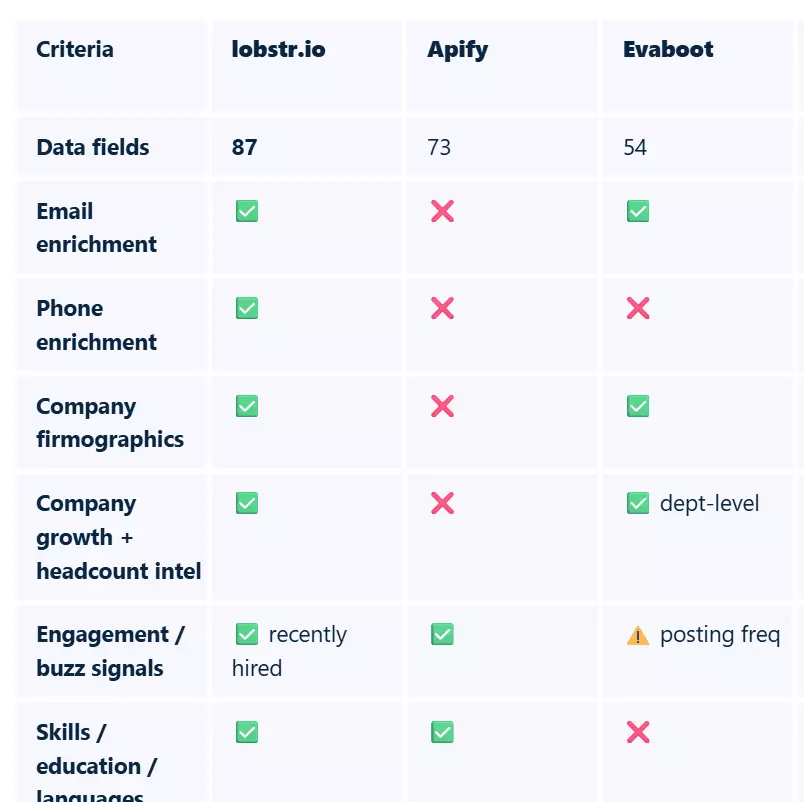
The short version of what I found. Most tools fail on the same three things.
They can't scale past one account. Sales Navigator caps you at 5,000 leads per day per seat, so a tool that syncs one account has a hard ceiling of 150,000 leads a month no matter how fast it runs.
They treat your seat carelessly. One tool asks you to paste raw cookies as JSON and tune the wait times yourself. Another logged my account out repeatedly and killed the run every time.
They stop at the 2,500-result wall. Your search matches 40,000 people, you get 2,500 and a shrug.
Let me show you the one that fixes all three.
Best Sales Navigator scraper: lobstr.io
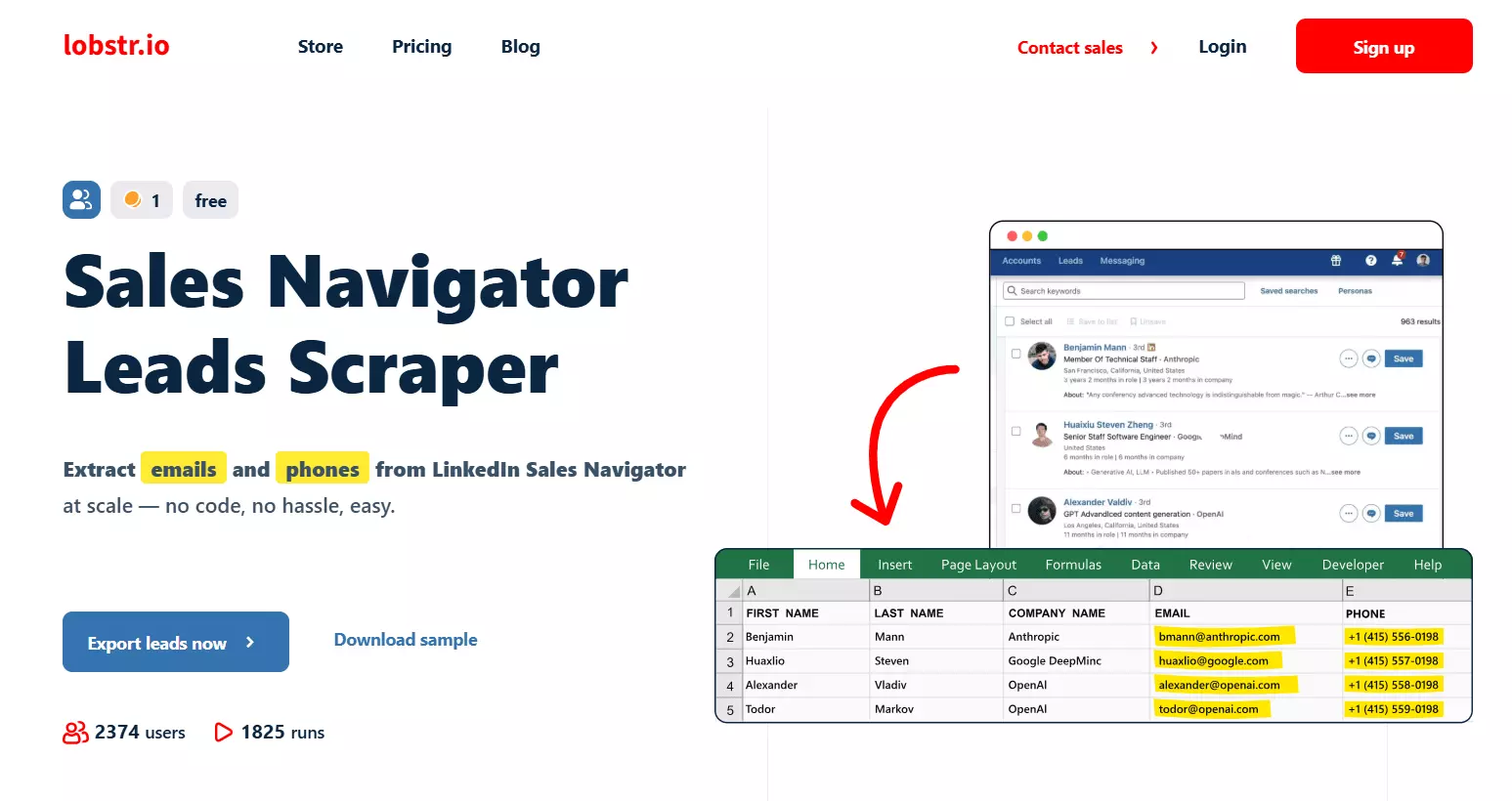
Features
- 87 data points per lead covering the full person, the full company, contact data, and profile depth like certifications, awards, publications, and projects
- 100 leads per minute on basic data, which clears a 5,000-lead daily cap in under an hour
- Email enrichment with real verification, returning
email_status,email_bounce_rate, andemail_typealongside the address - Mobile phone enrichment, the only one of the four tools I tested that returns a
mobile_phoneat all - Split search breaks an oversized search into facet sub-searches so you reach leads past Sales Navigator's 2,500-result cap
- Unlimited synced accounts with auto-switching when one hits its daily limit, so your ceiling is 150k multiplied by however many seats you run
- Built-in account safety with pause and resume on cookie expiry instead of a dead run
- Skip collected leads so a repeat run returns only what's new
- Deduplication across every URL in a run, on by default
- Export to CSV, Excel, JSON, or JSONL, or auto-deliver to Google Sheets, Amazon S3, SFTP, email, n8n, Make or a webhook
- Cloud-based with no installation, plus a full API and an MCP server for developers
- Seamlessly integrates to AI tools like ChatGPT, Claude, Cursor as connector via MCP
Proof it works at scale
I didn't want to take my own word for it, so I benchmarked it against Apify, Evaboot, and Phantombuster on identical searches.
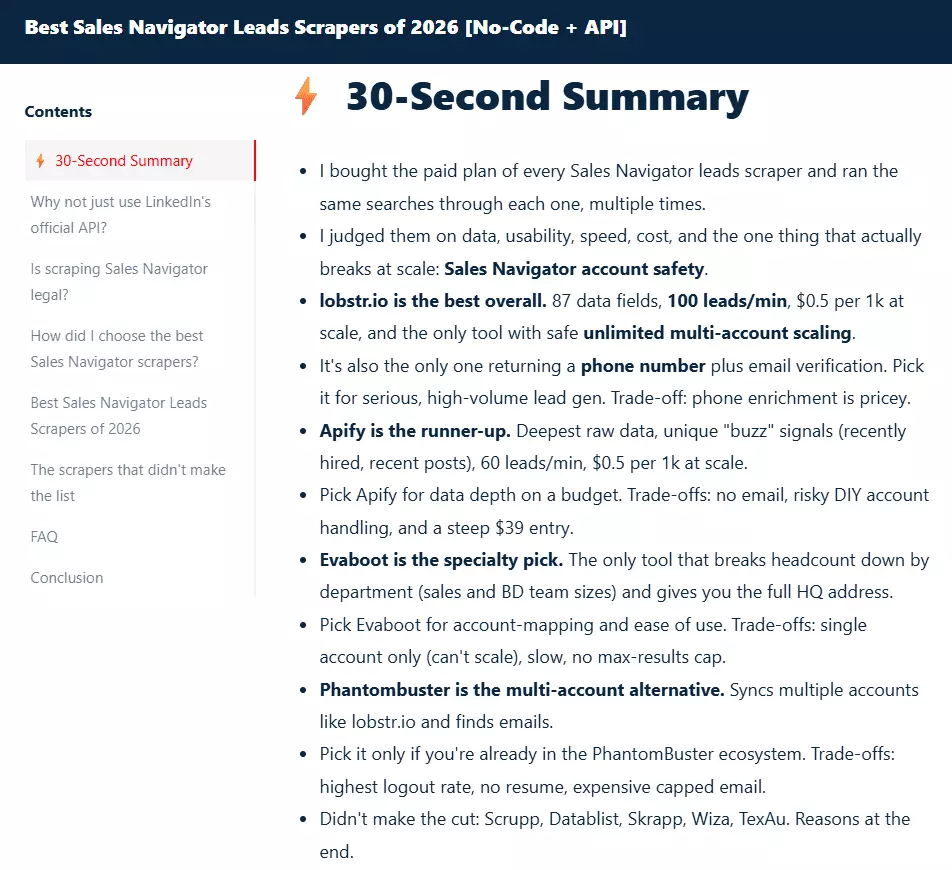
It came out fastest at both tiers, cheapest at scale on every tier, widest on data, and the only one that scales safely across multiple accounts.
In all that testing it never pushed an account into a logout or a temporary suspension.
Data
Here's everything you get per lead.
| Category | Data points |
|---|---|
| 👤 Person | first_name, last_name, full_name, headline, summary, industry, location, degree, connections, languages, is_premium, is_open, open_to_work, job_seeker, seniority |
| 💼 Role & history | position, current_role_description, recently_hired, current_job_numbers, started_on, months_in_position, years_in_position, months_in_company, years_in_company, positions, positions_structured |
| 🏢 Company | company_name, company_id, company_linkedin_url, company_domain, company_industry, company_location, company_employee_count, company_employee_count_range, company_employee_growth_6m, company_employee_growth_1y, company_employee_growth_2y, company_description, company_specialties, company_type, company_founded_year, company_revenue_range, company_phone |
| ✉️ Contact | email, email_status, email_bounce_rate, email_type, mobile_phone |
| 🎓 Profile extras | educations, educations_structured, skills, certifications, awards, publications, projects, organizations, volunteerings, websites, twitter_url |
| 🎯 Filter match | match_filters, no_match_reason |
| 🔗 Links & IDs | linkedin_profile_url, sales_navigator_profile_url, person_id, picture_url, banner_url, is_saved, pending_invitation |
Pricing
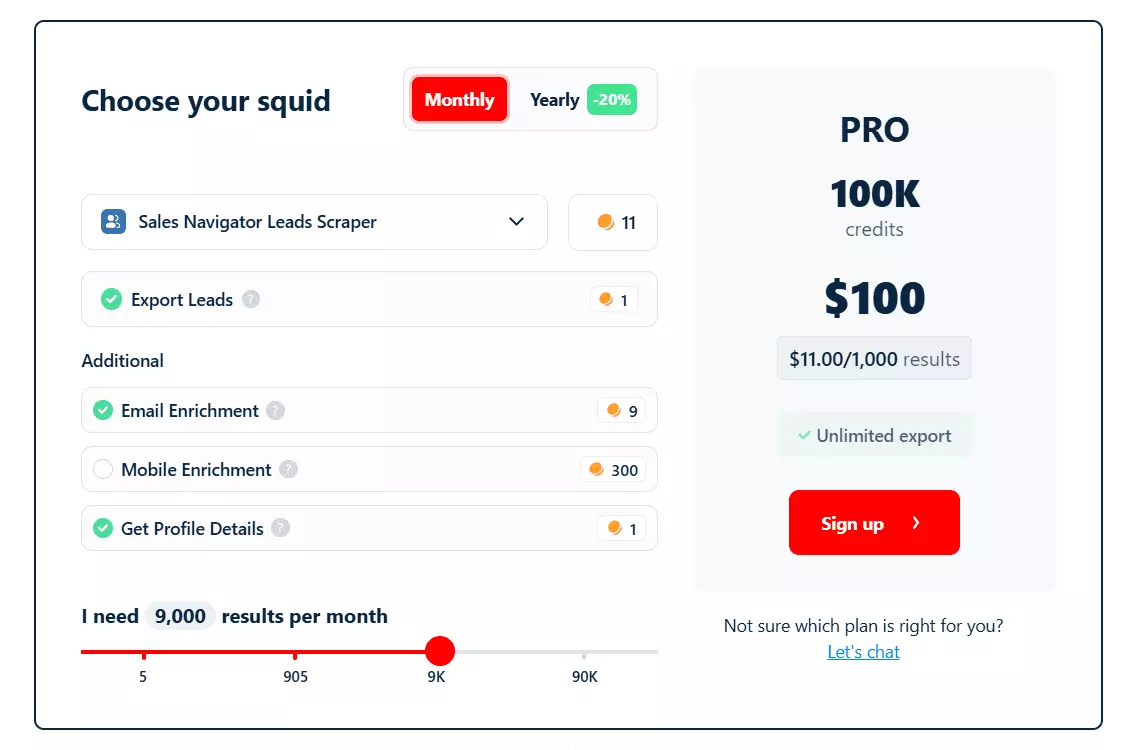
lobstr.io runs on credits. A lead costs 1 credit, and the enrichments you switch on add to that.
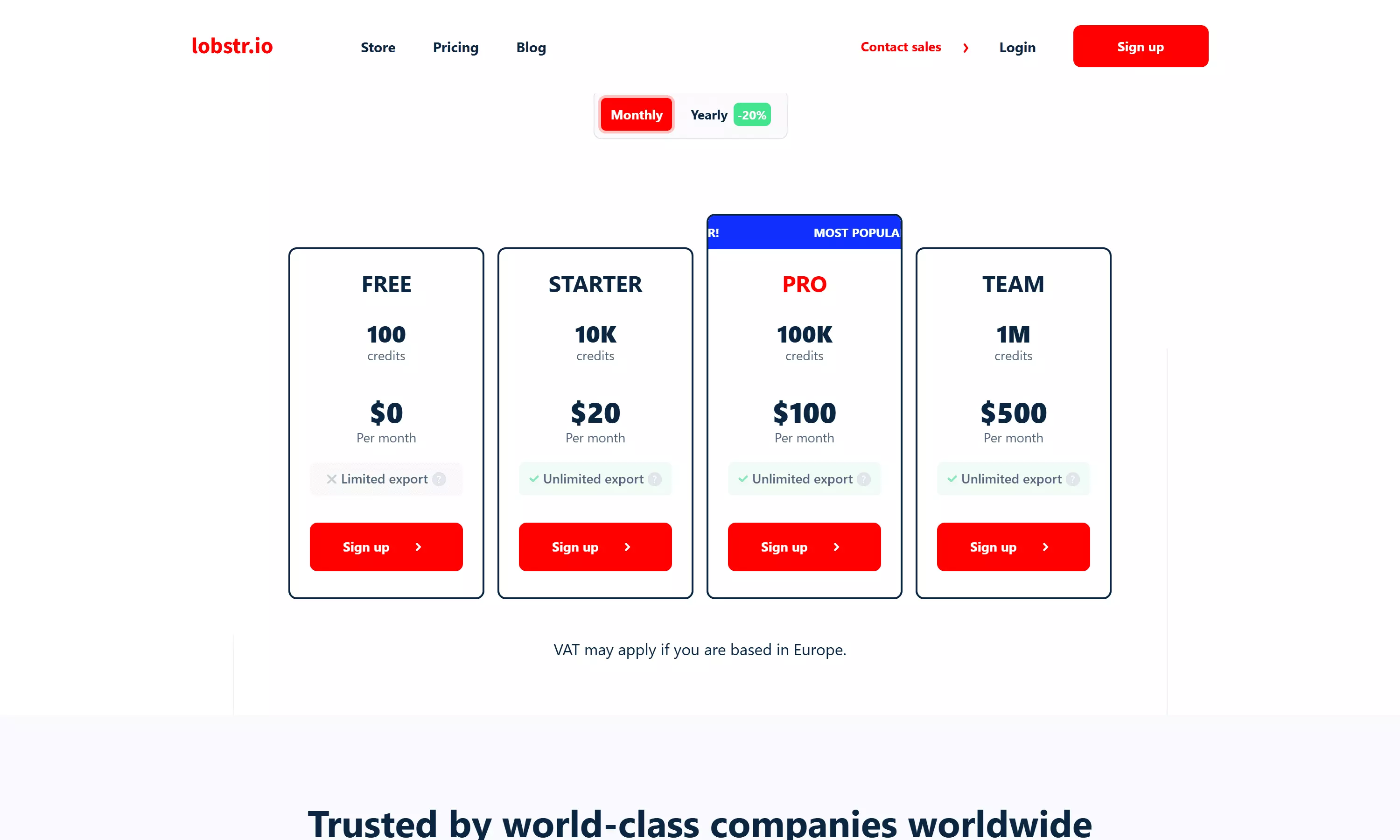
- 100 leads free every month on the Free plan
- Starts at $2 per 1,000 leads
- Drops to $0.5 per 1,000 leads at scale
- Leads plus verified emails run $22 per 1,000, dropping to $5.5 per 1,000
Here's what each function costs.
| Function | Credits | Notes |
|---|---|---|
| Export Leads | 1 | Per profile, the base cost |
| Email Enrichment | 9 | Per email found and verified. No email found, no charge |
| Mobile Enrichment | 300 | Per valid phone number. No number found, no charge |
| Get Profile Details | 1 | Per profile |
| Skip Collected Leads | 0 | Free |
| Split Search | 0 | Free |
| Get Beautiful Profile URL | 0 | Free |
| Start Page | 0 | Free |
You pay for results, not attempts. Fire 1,000 email lookups and land 200 hits, you're billed for 200.
That matters more than it sounds. One competitor bills every attempt, so a 20% hit rate costs you five times what it should.
Phone enrichment is the pricey one at roughly $155 per 1,000 profiles at scale. Nobody else offers phone at all, so weigh it against the alternative of not having the number.
So how do you actually run it?
How to scrape Sales Navigator leads using lobstr.io: Step by Step Guide
Scraping Sales Navigator with lobstr.io takes less than 2 minutes. Here's the process:
- Create a Squid
- Add tasks
- Adjust behavior
- Launch
- Enjoy
Step 1: Create a Squid
A Squid is just a scraper instance. To create one:
- Log in to your lobstr.io dashboard
- Click the red New Squid button
- Type "Sales Navigator" in the search bar
- Select Sales Navigator Leads Scraper
That's it. Your Squid is ready to configure.
Sync your Sales Navigator account
This scraper needs a LinkedIn account with an active Sales Navigator subscription. No synced account, no run.
Syncing happens through the lobstr.io Chrome extension and takes about five seconds. Open the Accounts tab in your Squid, click New Account, and pick your Sales Navigator account.
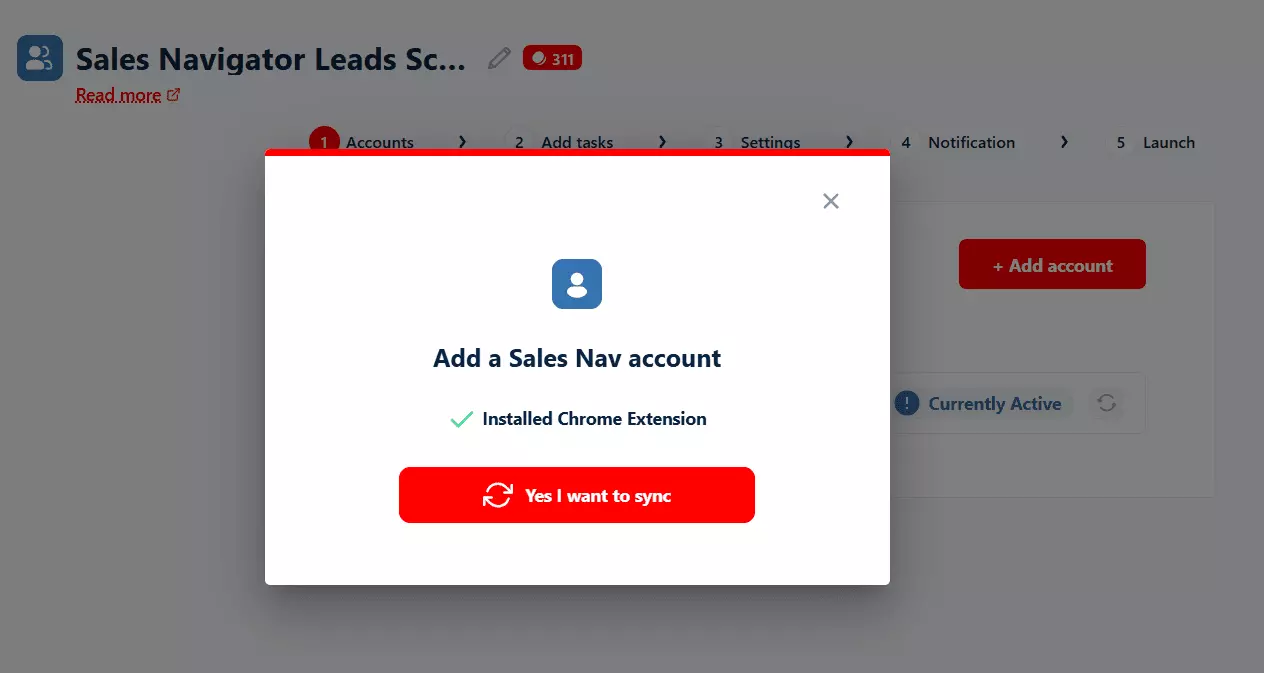
No credentials are shared. The sync is cookie-based, so lobstr.io never sees your password. Revoke access anytime by clearing your cookies or deleting the account from the dashboard.
Now the part that actually decides your ceiling. You can sync as many accounts as you want, and connect them to a single Squid or spread them across several.
LinkedIn puts hard caps on daily and monthly searches and profile visits. Sales Navigator tops out at 5,000 leads per account per day, which is 150,000 a month.
More accounts is the only way past that. lobstr.io auto-switches to the next account when one hits its daily limit, so ten seats is 1.5M leads a month and fifty is 7.5M.
Step 2: Add tasks
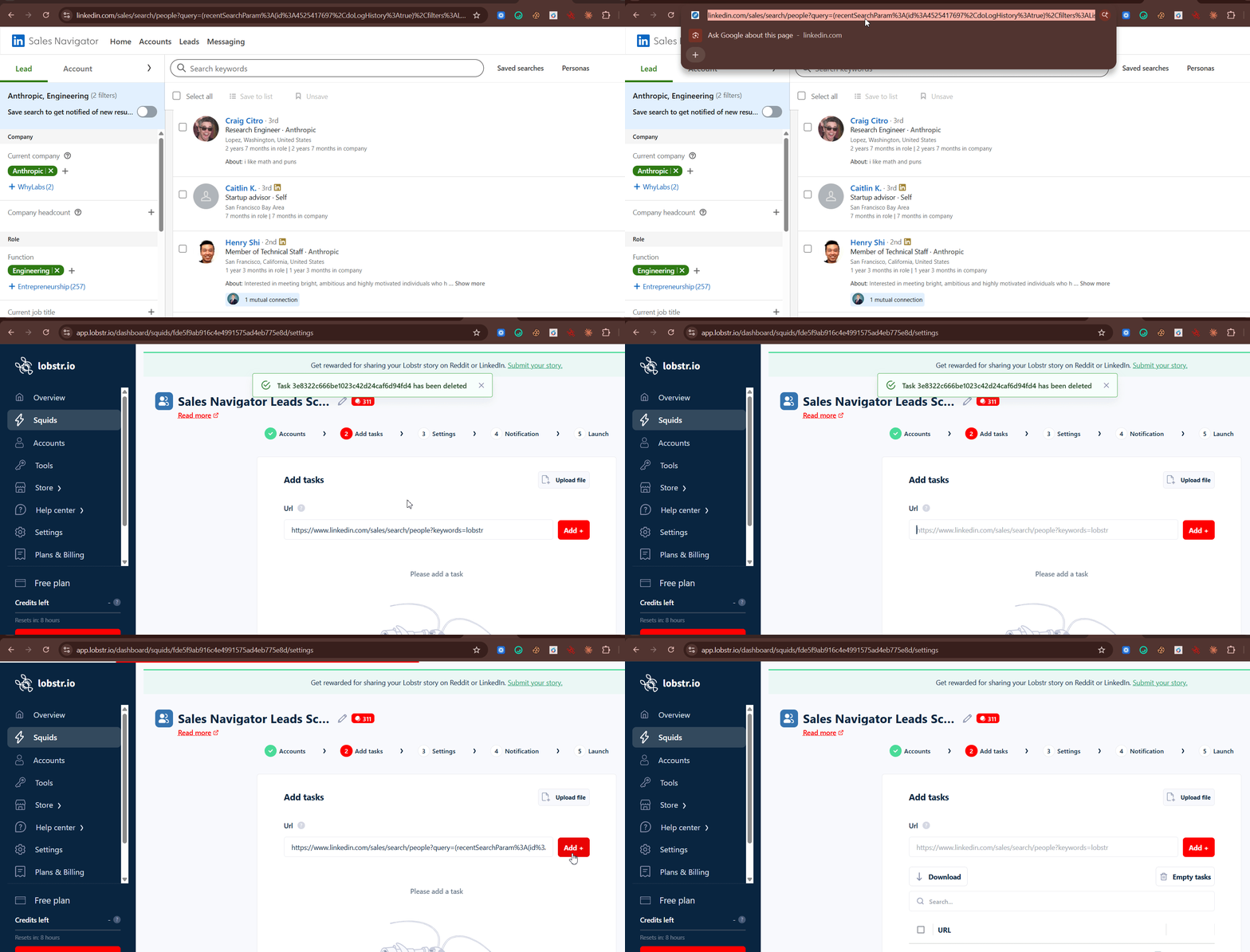
A task is simply your input. Here that's a Sales Navigator leads-search URL.
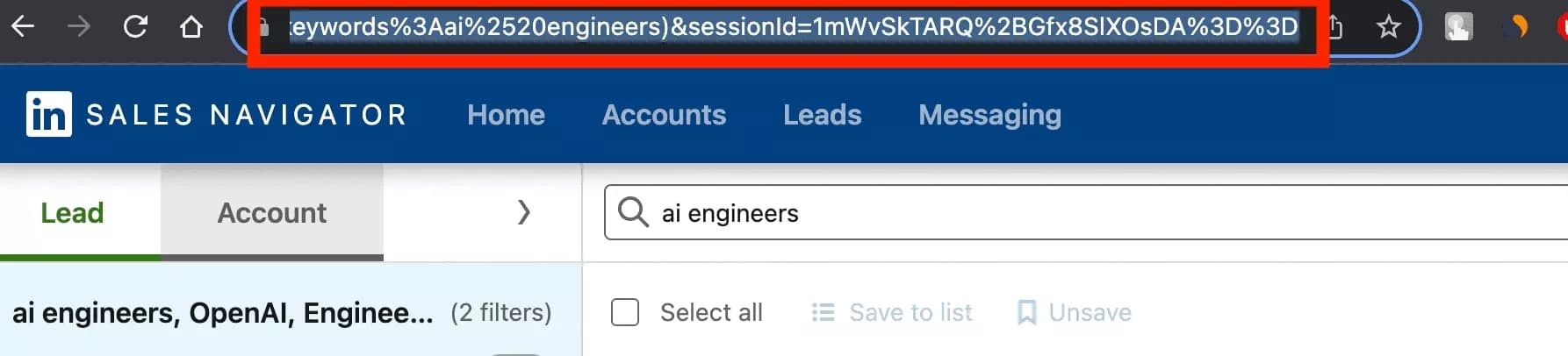
Build your search in Sales Navigator with whatever filters you want, then copy the URL out of your browser bar.
Paste it in, click Add +, done. Because the filtering happens inside Sales Navigator itself, every filter Sales Navigator offers is supported by definition.
Got a stack of them? Add multiple URLs one by one, or click Upload file and drop the whole list in at once.
Use the URL splitter
Here's the ceiling nobody warns you about. Sales Navigator only ever displays 2,500 results per search, however many leads actually match your filters.
A search with 40,000 matches hands you 2,500 and stops. That's LinkedIn's limit, not a scraper problem.
The manual fix is to slice one broad search into many narrow ones, and there's a free tool for exactly that.
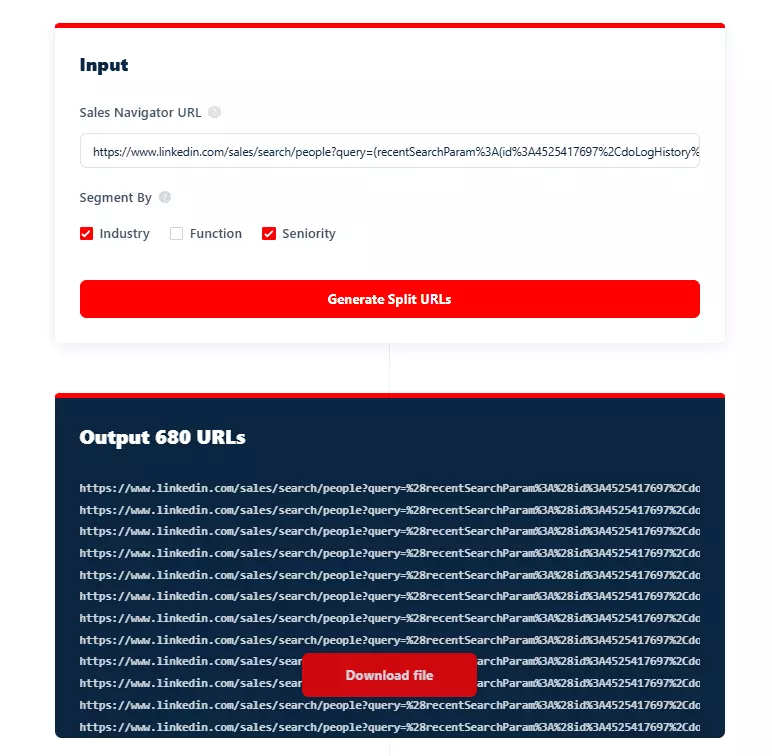
Drop in one search URL and it splits it by industry, function, or seniority. Download the output file and upload it straight back as your task list.
One search becomes dozens, each with its own 2,500-result allowance.
Once your tasks are in, click Save to move to Settings.
Step 3: Adjust behavior
The Settings tab controls how your scraper behaves.
I'm not going to walk you through every toggle. Let me cover the ones you'll actually use.
Enrichment
email_status, email_bounce_rate, and email_type. Costs 9 credits per email found and verified, and nothing when no email turns up.Mobile Enrichment... finds verified mobile numbers. Costs 300 credits per valid number, and nothing when there's no number to find.
Get Profile Details... visits each profile to pull industry, websites, Twitter URL, open-to-work status and the rest. Costs 1 credit per profile.
Turning both enrichments on slows the crawl to about 20 leads per minute. That's the trade, and it's still the fastest enriched tier I measured.
Split Search
The URL splitter is the manual route. Split Search is the automatic one.

Switch it on and any search with more than 2,500 results gets broken into smaller facet sub-searches by seniority, function, or industry, so the crawler reaches the leads sitting behind the ceiling.
It works best up to roughly 50,000 results. Huge or heavily skewed searches can still miss some leads, and it costs no extra credits.
Run controls
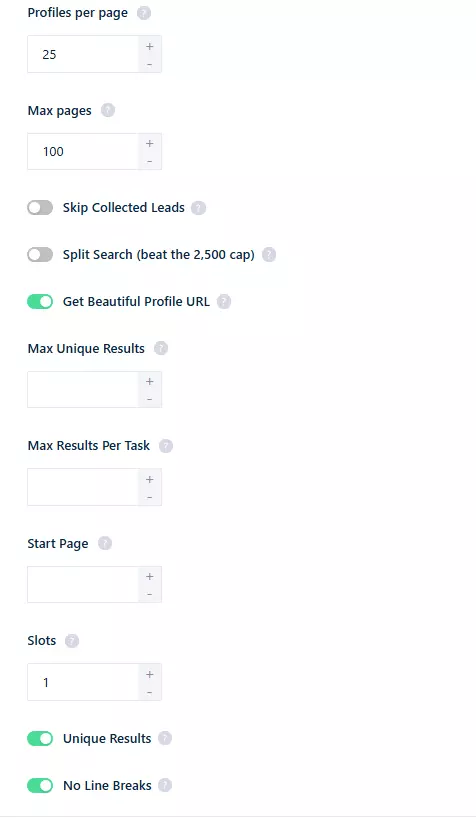
Skip Collected Leads... skips leads this Squid already collected on a previous run, so each run returns only new people. Costs nothing extra.
One caveat worth knowing. Since Sales Navigator caps every search at 2,500 results, once those are collected a repeat run can come back empty until the search itself changes.
Start Page... sets the page number to start from and overrides whatever page is in your task URL. Handy for resuming at an offset or skipping pages you've already pulled.
https://www.linkedin.com/in/john-doehttps://www.linkedin.com/in/ACwAAA...It's free, but it costs one extra LinkedIn call per profile and caps at 3,000 profiles per day per account. Hit that and the run pauses until the limit resets the next day.
Leave it off for maximum speed. The coded URLs open the exact same profiles.
Max results, max unique results, and max pages... cap the run so it stops where you want it to. Pages max out at 100 and each page holds up to 25 leads.
Slots... how many bots run on your Squid at the same time. It speeds up a run, but it isn't your scale lever here... accounts are, because the daily cap is per account and not per bot.
Unique Results... deduplicates across every URL in the run, not just within one. Leave it on.
No Line Breaks... strips line breaks from text fields so your CSV doesn't explode when Excel opens it.
Pro tip
Set your own safety limits rather than running flat out. The scraper has built-in guardrails, and when a cookie expires mid-run it pauses instead of dying, so you refresh the cookie and it picks up exactly where it stopped.
Once you're done, click Save. Next up is Notifications, where you can get an email when a run completes or pauses.
Step 4: Launch
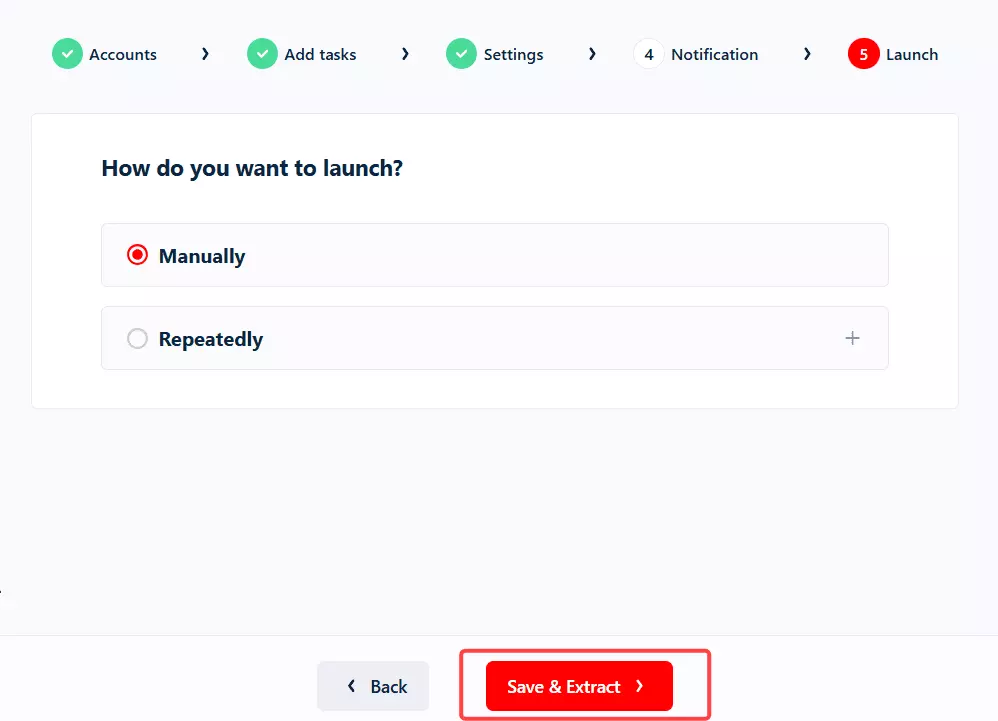
In the Launch tab you've got two options:
- Manually
- Repeatedly
Manually means instant launch. Leave it selected, click Save & Extract, and the scraper starts collecting.
But what if you want fresh leads every week without touching anything?
That's where Repeatedly comes in.
Switch to it and pick an interval... hourly, daily, on weekdays, weekly, or monthly. It runs in your timezone by default and you can change that.
Pair it with Skip Collected Leads and every run drops only the new people matching your search into your pipeline.
Step 5: Enjoy
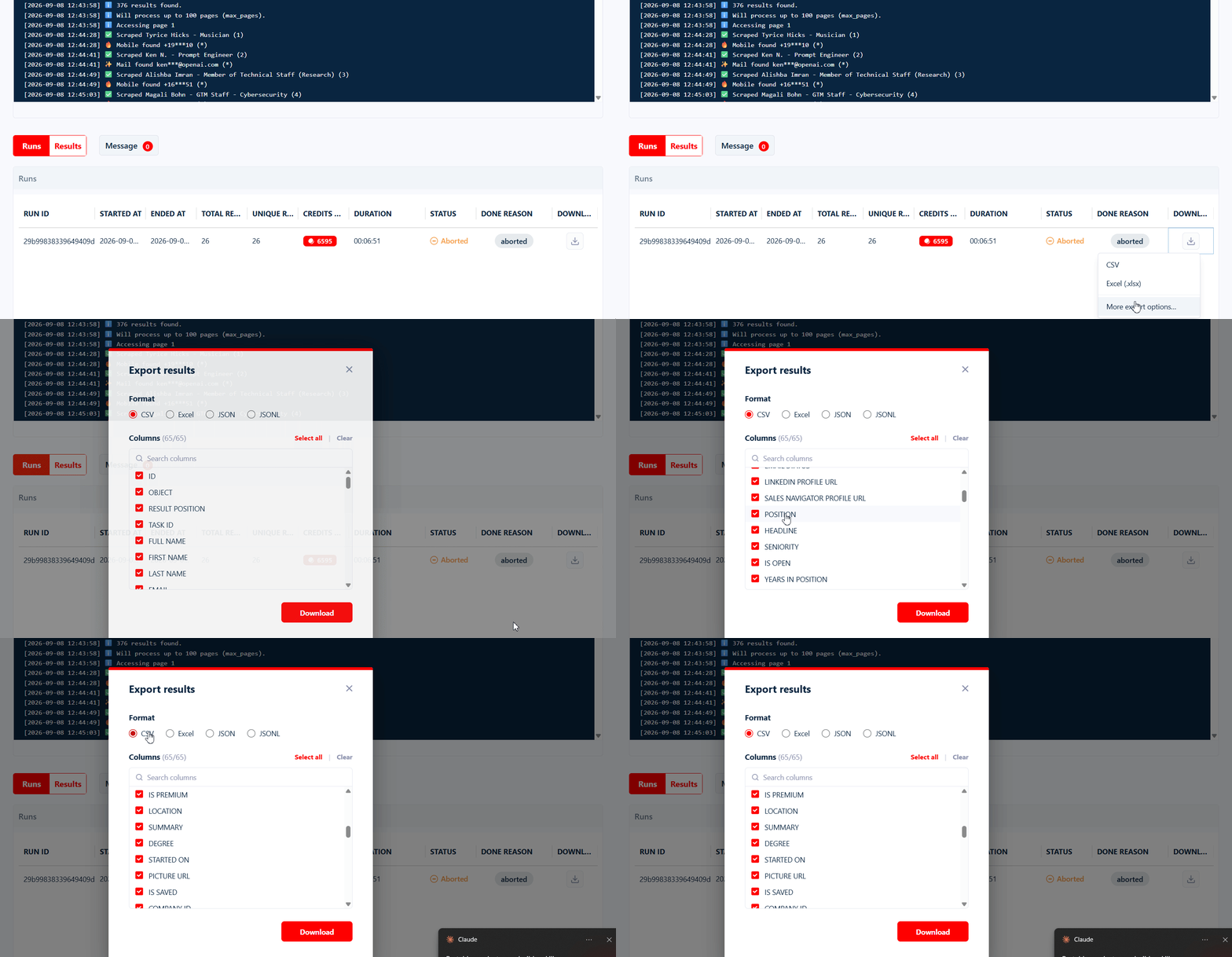
Results populate in the live console as they come in.
You don't have to sit and watch. Close the tab, shut the laptop, go do something useful. If you enabled the success notification, you'll get an email when the data is ready.
Hit Download and pick your format. CSV, Excel, JSON, or JSONL, and you can export all 87 fields or just the handful you actually need.
But downloading a file after every run? I don't like doing it either.
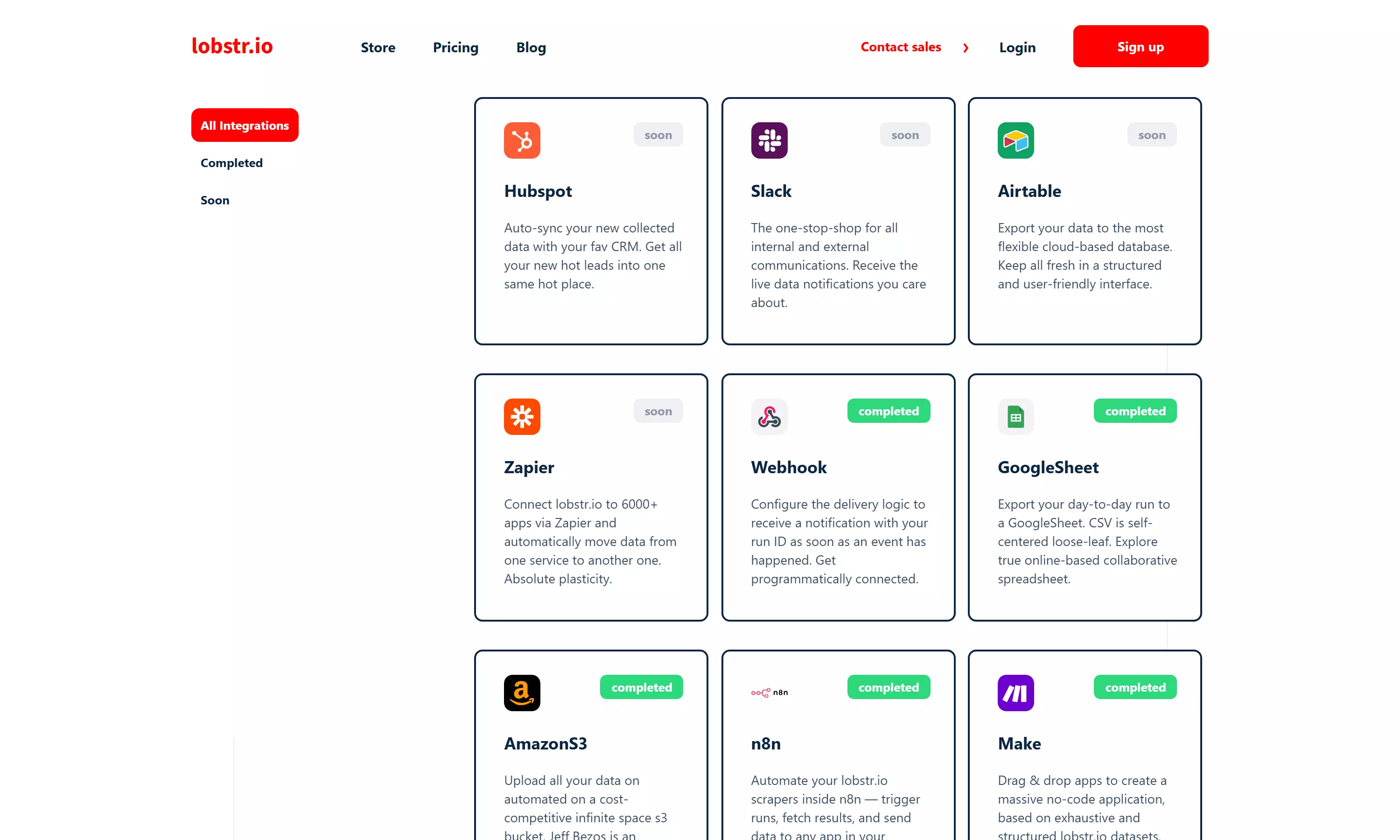
lobstr.io lets you automate delivery. Click the Delivery icon in the top right corner and pick your method.
Google Sheets is my personal favorite. You can also push to Amazon S3, SFTP, a webhook, or just have a CSV land in your inbox after every run.
You've got the leads. Now what?
What can you do with scraped Sales Navigator leads?
Raw rows in a spreadsheet aren't pipeline. Here's how you turn them into one.
Here's what people actually build with this data.
1. Cold email that doesn't burn your domain
valid email_status, and push the list into your sequencer through Make or n8n.You're sending to addresses a verifier confirmed exist, which is the difference between a clean inbox rate and a dead sending domain.
2. Multichannel sequences with a real phone number
mobile_phone. Email, LinkedIn, and a call, from one export.It's the expensive add-on, so save it for your tightest ICP segment rather than the whole list.
3. Job-change outreach
recently_hired and you've got people who just landed a new role. New budget, new stack, new problems, and nobody has pitched them yet.4. Account scoring and prioritization
company_employee_growth_6m, _1y, and _2y sitting next to company_revenue_range and company_employee_count tells you which accounts are actually growing.Rank the list, then spend your good sequences on the top of it.
5. Deep personalization at scale
certifications, awards, publications, projects, and current_role_description are the fields every other tool drops.Feed them into Claude or ChatGPT through the MCP server and each first line writes itself off something real.
6. CRM sync without the cleanup
positions_structured and educations_structured map straight into CRM objects, so you're not parsing a string field at 2am.Deliver to Google Sheets on a schedule and let your CRM pull from there.
7. Territory coverage at full scale
Sync several accounts, split one national search by industry or seniority, and run them in parallel with auto-switching between seats.
That's how you cover an entire market instead of harvesting the same 2,500 people over and over.
FAQs
Do I need a Sales Navigator subscription?
Yes. The scraper runs on your own synced LinkedIn account, and that account needs an active Sales Navigator seat to see the leads in the first place.
Will my LinkedIn account get banned?
Not if you stay inside the caps. The scraper has built-in safety guardrails, pauses instead of dying when a cookie expires, and in my testing it never pushed an account into a logout or a suspension.
How many leads can I scrape per day?
5,000 per account per day, which is Sales Navigator's cap and not a lobstr.io one. Sync more accounts and the scraper auto-switches between them, so ten accounts gets you 1.5M leads a month.
Why does my search stop at 2,500 results?
Because Sales Navigator only displays 2,500 results per search, no matter how many leads match.
Can I get work emails and phone numbers?
Yes, both. Email enrichment costs 9 credits per address found and verified, mobile enrichment costs 300 credits per valid number, and you're never charged when nothing is found.
How fast is the Sales Navigator Leads Scraper?
100 leads per minute on basic data, dropping to around 20 per minute with email enrichment and profile visits switched on.
How much does it cost to scrape 10,000 leads?
10,000 credits for plain leads, which is $20 on the Starter plan and $5 at scale rates. With verified emails on top it lands around $55 at scale.
What happens if my cookie expires mid-run?
The run pauses, it doesn't die. Refresh the account cookie and it resumes from exactly where it stopped, with everything already collected still intact.
Can I run the same search weekly and only get new people?
Yes, that's Skip Collected Leads. Just remember the 2,500-result cap means a repeat run can come back empty until the underlying search changes.
Which Sales Navigator scraper is actually the best?
I benchmarked four of them on identical searches with a public scoring rubric. Data, cost, speed, usability, and scalability, with the raw test outputs published.
Conclusion
That's a wrap on how to scrape LinkedIn Sales Navigator leads without coding, without a gated partner API that refuses to export anything, and without stopping dead at 2,500 results.